She was running, crying, gasping for breath. My pack heard her sobs and smelt her fear, and soon we were following her through the woods. She came to a clearing and fell to her knees, and we watched her through the shadows. The moon slid from behind a cloud and illuminated her face, and she was beautiful. With a look, I commanded my pack to stay hidden, then I took my human form and stepped out of the underbrush. She had bruises blooming beneath her tears, and welts on her arms and legs. I told her who I was--Chief of the Wolves--and bade her come to our village.
She sat in my tepee and I asked her how to care for her, and had the coyotes bring her anything she needed. She had fled a cruel husband, and his abuse had taught her to be timid and fearful. But she was with us now, a rare and tender flower I could not permit to wilt. I told her that she was our little sister now, and that we protect our own.
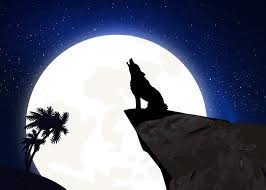
Soon, she learned the life of the wolves. She ran with us when we wished to run; she dressed our wounds when a hunt proved difficult. Once a month for an entire year, she followed me and my kin to a sacred butte, where she howled at the wide-eyed moon alongside the pack.
One day, I'd gone down to the stream for fresh water. As I drank, I heard two Dakota hunters laughing and joking as they approached the creek as well. They spoke of how they had followed the buffalo from the south, and said that now that they were less than a day's travel from the herd, a hunt would take place the next day. At once, I became a wolf and ran to our village--for I had made an agreement with the Chief of the Buffalo just one day prior, which allowed him to cross through our lands without conflict. The Dakota hunters would follow his tracks and find our village.
When I arrived, I told Little Sister that she must ride out to meet her people. "Tomorrow at noon, they will be here. You must speak with them, or they will follow the buffalo, find our village, and kill us all," I said gravely.
Little Sister agreed, but I saw that she was nervous. She feared being returned to her husband. Seeing her fingers twitch with anxiety, I almost changed my mind and called for us to flee in the night. But something shifted behind her eyes, and she wore her fear with grace--like a wolf. Somehow, it became bravery.
The next day, she went to meet two of the warriors on a knoll. Several of our pack went with her, acting as protectors. They exchanged words, and she returned to our village. I could sense that it was her last night with us, and I remembered what she was like when she first came to live among the Wolves. Timid, weak, and frightened. She had been so small and wounded, but as I watched her boldly stare down a coyote for the last of the buffalo meat, I could see how truly fearless she had become.
The next morning, I found myself watching from the sacred butte as our Little Sister rejoined her family. Even as I was proud to see the strength in her stance, I can't help but feel sad to see her go from us.
Now, with a stone in my heart, I tell the timber wolves and coyotes to pack up the tepees so that we can move on to land with better game. Now that the Dakotas have arrived, they'll take the choice buffalo for themselves. We all busy ourselves with our tasks, when suddenly....
Arooooooooooo!
...I hear Little Sister!
The rest of the pack perks up too, listening for her howl.
Arooooooooooo!
Again, she howls for us! Before I know it, I take off in the direction of the sound, catching her scent in the breeze. I can hear the thundering of a hundred paws across the plains, my pack running right behind me.
We crest over the hill and see a Sioux camp, with tepees, fires and people all milling about in the distance. But right before us is a pile of butchered buffalo: tongues, tenderloin and all the best morsels. Little Sister is perched on top of the meat, waving a red flag about in her hands and howling with all her might. I feel a burst of joy at the sight of her, and I stop short to admire how far our Little Sister has come. My kin descend upon the meat, tearing into calf-shoulder and romping in the great, bloody mess. Little Sister looks on with satisfaction while her kin look frightened as hundred of wolves make short work of their offering.
Little Sister smiles and looks at me, and I let her--and only her--see my human form as I smile back.
 |
| by trustmevhenan via Tumblr |
Author's Note:
This story is based on the Sioux Nation story of "The Lost Wife"--wherein a young woman flees an abusive husband and ends up living with wolves for a year. After she rejoins her tribe, she not only makes sure that the wolves aren't hunted, but that her people share the spoils of the buffalo hunt with the animals who saved her.
I wanted to do this story from the wolf chief's perspective because I think that it's clear that the girl and the wolf chief are the main characters. I know I usually do a 'romance' type of relationship but I think that it was better to have a big brother/little sister dynamic--someone who wants the best for her but isn't going to do the work for her.
I also think that doing it from the wolf's perspective keeps in tradition with a lot of Native American stories where an animal is the protagonist, and it let me put in some of those recurring Native American story themes.