Showing posts with label Reading Notes. Show all posts

Tuesday, November 27, 2018

Reading Notes - Crash Course Mythology (Mythical Places)

For this week, I chose to watch the Crash Course Mythology video unit on Mythical Places and I have found my favorite creation story. 

In the first video, "Gardens and Caves," we compare the Garden of Eden and the Fall of Man to the Zuni story of the Emergence from the Caves. Garden of Eden is symbolic of humanity beginning as perfect beings, being forced to live in the world as a punishment for disobedience, and functions an impetus for moral behavior so that we may one day return to that state of perfection. But the Zuni creation story is better to me because it symbolizes humanity emerging from chaos, ignorance, and immaturity. Humans are, at first, living in filth and confusion beneath the earth before a god takes pity on them and sends his sons to free them. Once they do, they try to teach humanity how to live and keep tweaking them in their sleep until they get it just right. Very cool, because it still has the supernatural element-and that's always a crowd-pleaser, but it isn't so much about an indictment or a punishment--it's about a gift. 

In the second video, "Mountains," I learned about ow mountains are used to symbolize lots of different things in different stories. In the Chinese tale about the 10,000 Treasure Mountain, a poor but pure boy helps an old stranger, is rewarded with magic keys to the 10,000 Treasure mountain--one to enter and one to exit. Each time he goes into the mountain, he chooses a practical treasure: grinders and hoes that actually produce food. A wicked king tries to steal the treasures, and eventually takes a key--but only the one to enter. So the king dies surrounded by useless treasure and the boy can no longer enter the mountain, but is rewarded for his humility and work ethic with a bride. And I guess her family is already rich since they had the keys to a treasure mountain and never used them. In a Japanese story, we learn how mountains and other elements of nature are anthropomorphized and treated as their own spirits, such as in Shintoism. This really helps characterize nature as the complex entity that it is--something that can help us or harm us at any time. 

I liked the "Trees" episode. I knew the myth of Apollo and Daphne already, but I'd never heard the Vietnamese myth of Tun, Lun, and Tao (and I'm sure I didn't spell them correctly. It was tragic but it had the kind of symmetry that I like to see in myths. It was like "Romeo and Juliet" but with a love triangle instead of two immature kids who thought they were in love but really just sort of died to be dramatic. 

In the "Cities" video, he discusses the varied history of Jerusalem, a city that is a prominent feature in all of the Abrahamic faiths. Depending on time, place, and narrator, Jerusalem is either a beautiful, holy place, or a dirty, sinful den. He also talks about the history of Rome, which I love because I read several of the Roman foundation myths. I liked that the Romans went back and wrote a seamless creation story for themselves, and I think it's even more interesting to look a the stories in historical context, because you really can see what the ideas of a time and place were. I really do love these little videos. 
"Fires of Troy" by Kerstiaen de Keunick
via Wikimedia Commons

Reading Notes - Grimm Fairytales (Ashliman, Reading A)

I read the Grimm Fairytales (Ashliman) and, while they were obviously familiar there were definitely some differences in tone that I noticed. For example, they either don't end happily ever after or they do, but either way there's a certain about of gore. In two separate stories a wolf's stomach was cut open with scissors, and living characters escape his belly then fill his stomach with rocks and sew him back up just in time for the wolf to meet his demise. 2 different stories with that exact same trope! That's wild.

There were also stories that I'd never heard of, like The 7 Ravens. I'd never read that story before but it was very trippy. A brief synopsis: 
Seven sons, accidentally cursed to turn into ravens by their father, are eventually rescued by their once-sickly sister, who was indirectly responsible for their curse. She frees them from the glass mountain with the help of their dwarf-butler, despite the fact that she lost the magic chicken bone given to her by the stars--the only non-carnivorous heavenly bodies.
Like what? But also, I would totally watch this if it was like a Tim Burton movie. 

Then there are the morals that are in the stories, both overt and subtle. In Little Red Cap (Little Red Riding Hood), the moral is "Listen to your mother or you and your grandmother will be eaten by a wolf." In "Old Sultan," the moral is basically "Don't count out the underdog." I thought "Old Sultan" was weird though, because the wolf helps a dog avoid being killed by his master for being old but then the dog refuses to help the wolf steal just one sheep in return because he's loyal to his master. The same master that wanted him dead just for being old. It's such a turn around from Native American stories, because obviously one would expect reciprocity in friendship, and I don't think that loyalty to a cruel master would be the focus just because one is a dog and one is a human. But whatever. 

The Grimm Fairytales are very well-known, and for good reason. You could make them much darker with hardly any work, or you can make them much cleaner and lighter--like the story of The Elves (and the Shoe-maker) or Red Riding Hood or Rumplestiltskin. 
"Rumplestiltskin" by Helena via Flickr

Tuesday, November 13, 2018

Reading Notes - Robin Hood (Reading A)

I read the Robin Hood tales, which are actually songs or I guess poetry. Which makes since, given the prevalence of bards and minstrels and whatever in Old England. I loved the animated Disney Robin Hood as a kid, so I was looking forward to reading the originals. What is so funny about the originals is that Robin Hood actually loses a lot more fights than he wins, which was kind of weird to me considering that he has this reputation as heroic, untouchable figure. I guess time and pop-culture have sort of strayed away from the original tone of the stories. 

But even though Robin Hood kind of gets his butt handed to him a lot, I can still see why he was a culture hero. When he comes to a worthy opponent, he makes sure to give them their props for not being able to defeat him. A lot of the Robin Hood stories follow this formula: Robin Hood comes across someone minding their own business in the forest, he asks them what their selling/carrying/doing, he decides that he's going to rob them/distract them/totally flaunt their authority, and then he challenges them to a fight. After they end up fighting, one of three things will happen: 1) Robin Hood will win (rare) 2) Robin Hood will start to lose, and will call on the horn for his merry men 3) Robin Hood will just lose. 

When he calls for his merry men, usually it's Little John who gets the task of fighting for Robin Hood. But he never succeeds where Robin has failed. So when Robin Hood loses, he either takes the guy out for a drink, or he invites him to join the merry men. This is why Robin Hood is a culture hero: because he's proud, but not so proud that he won't acknowledge someone else's skill. And some people today might think that it's dangerous to surround yourself with people who can beat you, but I think that's why the merry men followed Robin Hood. He only wanted the best of the best, and it's always better to follow a man with strength of character than it is to follow a man with physical strength...even if he is a gangster.

I have decided that I will add another story to my portfolio based on the Robin Hood stories. He really was a gangster--literally. He claims the forest is his because he "runs" it, he takes what he wants from people, he uses force and a gang of men to get his way. I think it would be fun to do the story of Allen a Dale in a modern setting--with Robin Hood and the Merry Men as 20th century gangsters. 

"Robin Hood, Original Gangster" by Silly Shirt Store- College Shirts
via Zazzle

Monday, November 5, 2018

Reading Notes - Celtic Tales (Reading B)

I am honestly loving these Celtic Tales. They are so random and so entertaining, a lot of things are sort of familiar from pop-culture, like the fairies and the goblins, but also there are a lot of things that I'm learning that you can only get from going straight to the source. 

For example, I was watching or reading something, and the legendary hero was a guy named Andrew Coffey. I didn't understand why, but the point was that he could see into the ghost world. Reading the original story kind of helped me make sense of the reference, even though he's less heroic and more human in the story. Every reaction he has to Patrick Rooney's ghost(?) is a reaction I could totally see myself having. 

I am sticking with my original point from Reading A: these stories are meant to connect the past (mythical or not) to the present, and preserve history and culture in a much more direct way than I'm used to seeing in the Native American or African myths. They use people's reall names, first and last: "My grandfather, Andrew Coffey," or "Prince Llewelyn, son of King John" or "King O' Toole." I know for a fact there are some O'Tooles in Ireland or Scotland who at least claim connection to these old stories. I would. 

My favorite stories from this selection was "King O'Toole and his Goose" and the "Tale of Ivan." I liked the colloquial way that the story of King O'Toole was told. The narration included things like "I'm telling you...", which I rarely see in stories. I think that's an interesting and underappreciated way to tell a story: literally telling it to the reader, no grandiose language just a casual storyteller. I've never considered telling a story that way, but perhaps now I might. Another thing that I liked about the story of King O'Toole was the fact the Saint Kevin was the supernatural element of the story. Somehow, I forget that you can look at religious figures in a lot of ways: culture heroes, actual messengers of god, or just supernatural beings. And Saint Kevin was a really interesting way to remind me of that. 

I also liked the Tale of Ivan because it had foreshadowing every step of the way but there was still a twist. That story was awesome, relaxing and entertaining. I also really liked the "Brewery of Eggshells" because it gave me insight into where the myth of "Changelings" come from. 
"The Legend of St. Stephen" by Martino di Bartolomeo
via Wikimedia Commons

I know we're doing a StoryLab this week, but I might try out this new storytelling method for my story next week. Maybe it'd be relaxing to just calmly tell a story. 

Sunday, November 4, 2018

Reading Notes - Celtic Tales (Reading A)

This week, I've decided to read the Celtic Tales for the British and Celtic unit. I have very little experience with Celtic culture or history, beyond what can be gleaned from pop-culture stereotypes of the region, the Vikings series or the show Outlander (both of which I highly recommend if you're into roguish-yet-lovable male protagonists and strong female characters). But I digress.

I found these stories were less about "deep, mystical truths" and more about entertainment and fun. Even more than that, they seemed to specifically have the goal or preserving Celtic cultural figures, like leprechauns, fairies and Druid magic. For example, the first story of "Connla and the Fairy Maiden" gave everyone a name except for the fairy maiden, and gave details about the king's Druid's method of getting rid of the Fairy. It also had lots of details about Fairy Land itself. The same is true for the "Field of Boliauns," wherein Tom Fitzpatrick (again, full names) tells us what to do and what not to do if we ever find a leprechaun chugging beer in a field. 

There were other stories that preserved history and cultural mysticism in a much creepier way. "The Horned Women" for one, was kind of weird. But now, I know what to do if a series of increasingly-horned witches enter my home and start weaving. "The Sprightly Tailor" gave us an actual location, as did the "Shepherd of Myddvai," which makes me feel like the point is to connect all generations of listeners/readers. 

My favorite story of these so far is a tie between "Munachar and Manachar" and the "Silver-Tree and Gold-Tree" story. The former is one of those stories/songs that makes a list of things and you have to keep track of all the things listed until the funny twist at the end. Loved that story, it was highly entertaining. The Snow-White story--Gold-Tree and Silver-Tree--was interesting. It's got everything, from filicide to polygamy. Both were highly entertaining. I look forward to reading the second section. 
"Munachar and Manachar" by John D. Batten
via Wikimedia Commons

Tuesday, October 30, 2018

Reading Notes - Native American Tales (Reading B)

I finished reading the stories in the Sioux Nation unit. These stories tended to focus more on a specific trickster character: Iktomi (or Unktomi). He is a spider, but in some stories he is given very anthropomorphic characteristics, for example being described as wearing moccasins or buckskin clothes. He reminds me of the African trickster Anansi, for a lot of reasons. 

In the first place, he is a trickster and a spider. He is used to tell anthological stories, such as the reason that people avoid certain spiders' nests. He is lazy in the sense that he has no work ethic, and would rather lie, cheat, or steal to get by--never to get ahead. his pride, conceit, and preoccupation with his baser instincts (i.e. hunger) are often his downfall. Sometimes he is portrayed as a genuine spider, sometimes as a spider-person-thing. In some stories he is a father, in others he acts alone. He is often used as a morality tale, but flipped. In several stories, like "Iktomi and the Coyote" or "Iktomi and the Muskrat," he uses trickery, but is later the victim of counter-trickery and his would-be victims are used to teach the lesson, even though Iktomi himself is the protagonist. 

I noticed a difference though, in the portrayals of Iktomi and Anansi. It seems that Iktomi is more willing to trick without provocation, like in the story of "Iktomi, the Widows, and the Red Plums." He had some red plums, went up to two widows, lied about where to find the red plums. Then he decapitated their children and served their bodies to the widowed mothers in a stew. Then tricked them again when they tried to kill him. He is definitely more murderous than Anansi, and where Anansi can be afforded the label of moral ambiguity, Iktomi is clearly just a jackass. 

"Iktomi cooking ducks" by Gertrude Spaller
via Wikimedia Commons

In other news, I have decided that I will write my story for this unit on the story of the Lost Wife, the girl who runs away from an abusive home and lives with wolves. I think it would be fun to write it from the wolf chief's perspective, seeing as he is the one who decides to take her in. It's another opportunity to explore character motivation, and maybe highlight some of the elements of Native American customs that motivate the characters, such as Natural Democracy. I am excited to write this story, and if it turns out well, I'll add it to my portfolio. 

Monday, October 29, 2018

Reading Notes - Native American Tales (Reading A)

This week, I read the Sioux Nation's story unit. I don't really know what I was expecting, but I really liked these stories. They were a strange mix of anthology and just pure entertainment. A lot of these stories were more light-hearted, or maybe I was able to read them in a light-hearted manner because I wasn't getting my wires crossed (last week, I had a ton of work to do including a Native American book report, which required a lot of intensity so I was reading everything with intensity). 

One thing that I know I can learn from these stories is that a story can be short but still entertaining and impactful. I tend to write and write and write in my own stories, and I think that it would be a good exercise for me to practice being more concise and try to still create a god story. 

I also noticed a lot of the consistent elements of Native American stories, namely: origin stories for why things are the way they are, animals acting as helpers for people, animals acting with human attributes, and spirits influencing human life. 

I had a fleeting idea for one story, seeing as I need to start looking for inspiration for my next story for the portfolio project. I really liked the Story of the Lost Wife. In it, a young woman, mistreated by her husband, runs away and is taken in by a tribe of wolves who learn how to care for her and give her shelter for a year. Later, when she is reunited with her own people, she makes sure that the wolves aren't hunted by her family. In fact, she ensures that they are fed with a surplus of buffalo meat before permanently rejoining her tribe. I think that this would be an interesting story to write from the woman's perspective, or from a family members perspective. It's kind of a "new" (technically old) take on the whole feral child thing. Or like the Jungle Book. 

I'll read the second half and see if any other stories really speak to me. 
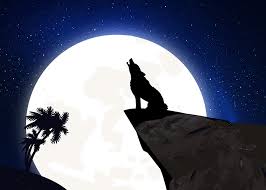
"Howl" by Sim33 via Pixabay


Tuesday, October 23, 2018

Reading Notes - Native American Tales (Reading B)

For the second half of the Marriage Tales section in the Native American unit, I noticed only a few more distinctions. For one thing, none of the people are given names. Places and ceremonies have names, but none of the characters is given a proper name. In my Native American philosophy unit, we learned that oral history is really important in the Native American tradition, and that the stories are used to connect all generations to the values and homeland of the community. Stories are used to teach people about what's important to them and to their community. Maybe that's why many of the protagonists are nameless. 

I really liked the stories from the Nlakapamuk people. "The Youth that Joined the Deer" was really interesting in more ways than one. First, I knew off the bat that they were Deer-People. I don't know why the hunter took so long to figure it out, but in keeping with the casual-impossible-phenomena theme, I don't think it mattered too much to him to get to the bottom of things. Until he shared the secret with his people. This story also embodies some characteristics of Native philosophy: sacrifice and working for the good of the community. The deer people were willing to be killed and restored, over and over, to sustain their community. The hunter was sure to teach his people and his children about responsible consumption. We don't just take, we acknowledge that something or someone is missing out on something (including life, maybe) so that we can survive. It's all about balance, as Dr. K is fond of saying. 

I also liked the True Bride story, also from the Nlakapamuk tribe. It was longer, but there were so many weird twists and turns that I was entertained the whole time. I also thought it was interesting because it seemed to be have been told--or at least written--at a later date than some of the other stories in this unit. Where before, all the characters were (or could be assumed to be) Native Americans themselves, this story made sure to point out that some people in the story were white. It also mentioned the layout of the houses and a public hanging. And I'm no American History genius but maybe some details were added into an old story, or this was a relatively newer story. 

And speaking of the evolution of stories: "The Girl and the Turkeys" was basically a Cinderella story with the twist of no happy ending. And I though that this was really cool for a lot of reasons, least of which is: Why would you want to end a story without "And they lived happily ever after?" Oh right--because the primary purpose of stories for communities with strong emphasis on oral history is to teach. So that brings me to my second observation: that every culture in the world has some version of the Cinderella story. There's versions from Asia, Africa, Europe, and now even the first people of the Americas. Either Cinderella was the first story ever invented, or cultural exchange has been happening a lot longer than we thought. 

I don't really know what kind of story to write based on these stories. I'm having a lot more trouble taking the themes in these myths and running with them far enough to make them my own without just copying the original. The most important and prevailing theme in these stories is: disobedience = bad. Which, all in all, is not a bad lesson. But people who behave don't make good stories, as I'm sure we all know. 

"Female Wild Turkeys" via Wikimedia

Reading Notes - Native American Tales (Reading A)

For this week, I read the Marriage Tales from the Native American unit. I really liked these stories because the tone was so oddly casual. There were wild things happening in every story and it was all so wonderfully understated. In "The Piqued Buffalo-Wife," a man had a child with a buffalo and the child came looking for him, and there was no description of what he looked like until the end of the story. Was he more human? Or more buffalo? No one reacted to the fact that the man had had a child with a buffalo either--they just helped the buffalo-child look for is dad. 

Also, the Native American myths remind me of the African myths in a lot of ways. First, there is the trope of "You Had One Job." In a lot of these stories, there is a character who gets a really sweet deal, and all they have to do is not break one rule. In "The Piqued Buffalo-Woman," the man married the buffalo, both she and their child become fully human, and she tells him not to swing at her with fire. Seems pretty simple and easy to avoid, right? Wrong. Like all the "You Had One Job" stories, the person breaks the one rule over something stupid. The wife didn't want to cook food for the man and all his friends, so he swung at her with a log from the fire and she and the child both become real buffalo and run away...which leads to the man being trampled, through a series of unfortunate events. In "The Bear-Woman," an insane older sister who was once the wife of a bear (who was killed by her father and brothers) plays 'Bear' with her little sister and brother, but tells them not to touch her where her kidneys are. The younger sister forgets, touches the older sister in the kidneys, and the sister turns into a bear and kills a lot of people in the camp...which leads to the older sister being shot in the head by her siblings, through a series of unfortunate events. It is worth noting that both of these stories are from the Blackfoot tribe. 

"Hunting Buffalo" by Alfred Jacob Miller
via Wikimedia Commons


Another thing that I noticed about Native American myths, which a little reminiscent of African myths as well, was the incorporation of casual yet impossible phenomena to anthropomorphize the animal characters. In my Native American philosophy class, we learned that "Natural Democracy" is the equal consideration of all being on Earth, and it is a prominent feature in many Native tribes' philosophy. For example, in the "The Woman Stolen by Whale-Killers," the whales steal a man's wife and drag her underwater. Her husband follows, somehow neither of them drown, and the whales have a large fire going in their home. The Shark, who is helping the man to reclaim his wife, helps the fire to get out of hand, and then all the fish are bringing buckets of water to put out the fire...that's underwater. Animals, rocks, and plants can be helpers and/or villains in Native American stories, like in "Splinter-Foot Girl." This theme is keeping with the Native American tradition of Natural Democracy: nature doesn't just exist in a separate/lower level from humanity, but we are all coexisting--antagonizing each other and helping each other, like one big family. 

Wednesday, October 17, 2018

Extra Reading - Crash Course Mythology (Creation and Destruction)

In the first video for Crash Course Mythology: Creation and Destruction, the guy talks about the relationship between humans and animals with respect to Creation. Obviously, in the Judeo-Christian tradition, humans are placed above animals by God. This is really interesting because it affected and continues to affect the way that societies with majority-Christian populations relate to nature. For example, here in the U.S. we have a population that's mostly claims Christianity of some kind and we have more policies introduced by religious politicians that harm the environment for human gain. Is it because "God gave Man dominion over the earth?" And other traditions, such as Native American creation stories, animals are equals and help humans. In some stories they lead them from an inner world through various doorways until they got to this world; in others, a young woman falls from the sky and lands on the backs of duck, then a turtle takes over and carries her and his back becomes the Earth. These creation stories make animals and nature essential to human survival, and it's totally consistent with the long-standing philosophy of Natural Democracy within the Native American community.

In the second video, he talks about the apocalypse. I think it's so interesting that humans have a sort of hive-mind when it comes to the shame and failure of our species. How is that so many different traditions around the world think that humans are garbage and must be destroyed by some wrathful deity's hand? And what does it say about us that even in an apocalypse, there have to be winners and losers? Anyway, we all know the deal with the Judeo-Christian apocalypse: fire, brimstone, face-melting. Lots of civilizations in the Mediterranean have these similar stories, for example, the Persian apocalypse is similar to Judaism and Christianity. In the Islamic stories, there is more natural disasters and a loss of morality among the people. Also, keeping with the Abrahamic tradition, there is an anti-Messiah, intent on ruling before Jesus and a heavenly army free everyone, rule, and leaves--then everything is terrible and destroyed, and then everyone is resurrected and Mohammad will return to Earth and measure everyone's sins. What's interesting is that the Islamic tradition gives everyone much more time to fix their mistakes--which is really incongruent with the intensity with which this religion is associated. Maybe we just have a one-dimensional view of Islam. 

The third and final video talks about Ragnarok, which is the Norse apocalypse and is the one that I was most looking forward to learning about. First, there will be three long winters in a row, and all the people will be hungry and turn against each other. When civilization implodes, almost everyone is dead, adn the living are basically animals, two mythical wolves Hati and Skul (spelling is questionable) will eat the sun and the moon, and the world will plunge into darkness. Then, earthquakes will come and they will break the chains that hold Loki to the rock (spoiler alert, the chains are actually his dead son's intestines--punishment for tricking everyone into killing Baldr) and both he and his giant demonic-wolf son Fenrir will be free. Then three roosters will crow, and the giants, dead of Hel, and warriors of Valhalla will awaken. Loki's other son, a giant demonic-snake will slither through the seas. Loki will take all his monster babies and the minions of Hel and challenge the Asir( "good" gods) at Asgard, with the rainbow bridge collapsing behind them. Heimdal warns the Asir, and Odin leads them and 800 noble dead warriors from Valhalla into battle.

I like the Norse apocalypse because it isn't like it's anything that everyone deserves, but just the way the world will end, whether humans are intrinsically good or bad. It doesn't matter what you do--the world will end with all the gods killing each other, Fenrir's defeat by a magic indestructible shoe, and the giant-king killing the last of the Asir and plunging every realm into fire and the earth sinks into the sea. But since all the world is water, there is new hope--not all of the gods die, and from the water a new earth forms. And the gods who survive make sure that the stories and a few artifacts from the old Norse pantheon survive. It's like we can't know if the apocalypse has already happened, for all we know we could be on our third or fourth world. Creation, destruction, and rebirth. Honestly, who doesn't love an apocalypse with a happy ending?

"The Punishment of Loki" by Louis Huard


Tuesday, October 16, 2018

Reading Notes - China Folktales (Reading A)

I haven't read many Chinese Folktales, but I really liked these stories. They were short and sweet, but still super entertaining. It had the same randomness of the African tales--with all the magical realism and the ability of mortals to interact with the divine. I noticed a few overarching themes in these stories, and even though they weren't exactly what I'm used to but I still found some new favorites.

The first two stories, "The Favorite Child of Fortune and the Child of Ill-Fate" and "The Cave of the Beasts," have semi-unsatisfying endings. In the first story, it seems like everything goes right for a while in the first story, wherein the unlucky wife and her lucky husband are separated for years and then reunited as emperor and empress--then the wife dies eighteen days later while the husband lives for years thereafter. In "The Cave of the Beasts," the father leaves his children to die in the woods, and when they use their cleverness and quick-action to live (and to luckily stumble upon a cave full of priceless jewels), the father feels remorse and goes back for them. Then profits off of the luck of the daughters that he wanted to kill. Did I mention that the reason that he wanted to kill them is because they ate some eggs that he found. Why didn't he get his comeuppance?

I like that different myths start out with there having been 10 suns in the sky and provide different reasons for there only being 1 now--from Yang Oerlang hunting them down in revenge for his mother to an emperor with many talents shooting them out of the sky until one remained. It's very cool to see the different origin stories, and it helps you remember that while "Chinese" refers to a large nation with a lot of people, there are different traditions existing within the country as a whole. There is also a prevailing sense of self-determinism, and you can kind of see this in the story "The God of War," where it's hinted at that Guan Yu was once a regular man, a regular warrior. But he was so brave and noble and faithful, even in death, that he became the Master of War. It's also hinted at that Confucius, who we know was a normal man--but an excellent scholar--became the Master of Wisdom. That means that if you excel at something and are pure in your intentions, you can reach a semi-deified status. 

I think that I would like to write a story based on the "King of Ants", which is about a scholar witnessing the hunt and politics of tiny people--before they taunt him and h destroys them in anger. Or maybe a story based on the "Lady of the Moon," wherein an emperor is able to find a way to get to the realm of the Moon, and is given gifts by the moon.

Guan Yu Seated (Chinese God of War)
by Hosukai via Wikimedia

Monday, October 8, 2018

Extra Credit - Reading Crash Course Mythology (More Pantheons)

First off let me say that the Indian, Norse, and African pantheons are highly underrated. I got really different impressions from all three of them and I appreciated each one equally. 

The Indian pantheon is cool for a lot of reasons. First, it's still 'alive' today, unlike the Egyptian and Classical gods and goddesses. Secondly, there is a more palpable spiritual aspect to it. I think I just personally really dig the symbolism, and it's shared characteristics with lots of other traditions make it that much more interesting. There is Brahman, the soul of the world. It's separate and greater than any one person, but every person is connected to it. It's also represented by three personifications--Brahmin (creator), Vishnu (preserver), Shiva (destroyer). Sounds kind of like another Trinity. The goddesses are amazing too, specifically Kali, a warrior goddess who is unbeatable in battle and too busy being a badass to date. The story of her victory over the Buffalo God was literally amazing. I really want to look up more Hindu/Indian mythology stories after hearing just that one. 

"Shiva"
siobanhill via Pixabay

The Norse pantheon obviously has gotten more attention than the Indian and African pantheons because of the Thor comics/movies, but you really can't beat the original. I have never read Norse mythology, outside of what you can kind of pick up from Neil Gaiman's American Gods (great book, highly recommend it). But in the video, the descriptions taken from an old Scandinavian author named Snorely have a really distinct tone, and I'm into it. For example, Heimdal (Idris Elba's character in the movie, with the cool gold eyes) can "see far in the night and in the day," and "hear the grass growing and a wolf walking and everything that makes sound" or something...cool stuff. The Norse myths in general seem less symbolic and more relatable and simply entertaining. The video describes the theft of Thor's hammer by a giant, and his and Loki's harebrained scheme to dress Thor in a wedding dress to get it back. They get away with it thanks to Loki's lies, even though Thor eats all the food and it should have been incredibly obvious that he was not, in fact, a woman. Then he gets his hammer back, kills every giant, including the women and children, and the story ends: "and so Thor won his hammer back." You gotta love the Norse pantheon.
"Ah, what a lovely maid it is!"
Elmer Boyd Smith via Wikimedia

The African pantheon was also really cool, but I can kind of understand why it isn't as well-known as some other traditions. For one, Africa is really big, with hundreds of individual cultures, languages and ethnic traditions and stories. They're also really big on oral tradition, so it's harder to have a one uniform source, unlike Classical mythology which has poets like Ovid and Homer. Also, the Orishas, which the video highlights because the tradition is easier to track, are very different in nature to the gods we're more familiar with. In almost every culture, gods and goddesses are just born with their domains. They don't earn them, generally. But in the African tradition, the Orishas had to get their own powers from their leader Olorun or his son Orunmila. They asked for powers to help Orunmila, so that he wouldn't need to fix all their problems for them. But he valued them all equally, so he didn't know how to distribute them. After speaking with a wise chameleon, he decided to give all the Orishas notice and just rain down the powers on them. He gave each of them a fair chance, and gave them powers when he didn't have to. I think that says a lot of the culture. 

"Changó"
Paul K via Flickr

I really enjoyed the videos, I always do. I originally needed to catch up on some points to maintain my desired grade, but I think I could honestly just kick back and watch these Crash Course videos. 

Tuesday, October 2, 2018

Reading Notes - African Tales (Reading B)

I think that the main lesson that I've taken away from African Tales is to always finish reading the story before making notes. You might think that one thing was going to be really important and then it turns out to just be a side note, or you might think something is just detail or unimportant, but it turns out to be a major plot point. I also am more focused on magical realism. 

I think that magical realism is fun to read but difficult to write. American tradition doesn't support stories that feature casual magical beings and items. Magic has to have this air of gravitas, a seriousness that gets played off of by certain characters taking it lightly, but the reader is always in awe of the magic. We don't have any stories where magic is just incorporated into our every day lives, or at least, none that are very prevalent come to mind. 
I liked how in Hassebu, they heard that the ground was hollow and so they dug and found a pit full of honey. None of the wood cutters thought: "Wow, where is all that honey coming from?" They just thought they could sell it for a higher profit than wood. Hassebu got to the palace of the King of Snakes, and never even wondered how the hell a tiny hole in a pit full of honey led him to a palace with a golden door that belonged to snake--the King of Snakes. He didn't question how a snake-based monarchy was operated? He treated the talking royal snake who lived in a splendid house, which was accessible through a pit in the ground which was originally filled with honey (somehow), as if it were nothing. Just something that was happening and all he could do was react accordingly. 

I just like that no one has to explain themselves, even though I find myself still looking for explanations. It's frustrating because I think you miss some of the important themes when you'r distracted with questions like "How?" I try to remember not to worry about "How?" and focus more on "Why?" 

Another thing that I think Western tradition has made a difficult transition is the emphasis on logic over emotion. In the West, the brain is the most important part, we have to think things through rationally before we accept them. In other cultures and traditions, how you feel is just as valid or maybe even more so than what you think. When the monkey was telling the story of the Washerman's Donkey in the story "The Heart of a Monkey," I was entertained. But then, in the end, when he said that the hare said: "The donkey has no heart, because she came back even though the lion tried to eat her the first time." But I thought that the fact that she kept coming back meant she had no brain. I mean, I certainly wouldn't have kept going back if the lion tried to eat me the first time, Queen of the Jungle or not. 

I think for my story this week, I want to do a magical realism story where we don't need explicit rules or explanations to enjoy. I want to just have giants roaming the earth, like in Makoma, and people dealing with them in a casual way (even though Makoma was not casual about the giants, since he kept going around beating them up with his hammer). One story that sort of does this comes to mind: John Henry, from the old African-American tradition. "Born with a hammer in his hand," he plowed through a mountain and beat a steam engine so that all the other recently-freed slaves could keep their railroad jobs, but then he died because his heart couldn't take it. 
"Died Wid his Hammer in His Hand"
Palmer C. Hayden via Wikimedia

I don't know how I'm going to do it, or what it's going to be about, but I'm gonna try to come up with a magical realism story. 

Reading Notes - African Tales (Reading A)

I chose to read the African Tales myths, mostly because I was skimming through the options and came across the very first story in the Reading, Motikatika. 

In that story, which is heavy on the magical realism, a wife is sick. Her husband goes to try to find her honey, but she rejects it several times before she accepts. When she's feeling better, her husband decides that its his turn to be waited on hand and foot, and send her out for water. He rejects all the water she brings, until she goes to a special creek which has clear water. Here's where the story got weird.
"Portrait of African Woman Carrying a Pot on Her Head"
pxhere

This ogre pops up out of the river and he demands that she give him payment for taking his water. Then she (wildly) offers the ogre her baby in exchange for a pot of water. At this point, I'm thinking she's crazy. The ogre, though, thinks this is a great idea and somehow a baby's life is equal to a pot full of water, which he is sitting in and getting all ogre-y so it's not like this is the most sterile, delicious, stream of water on earth. But I digress.
So the mom says she'll shave her son's head, give him beads to wear and the ogre can just call his name to come and get him: "Motikatika." But!--y'all ready for this?--the baby is a magician. Who taught the baby magic? What constitutes a 'baby' in this story? Definitely not someone who does magic, right? Anyway, the magic baby has heard that his mom is gonna let an ogre eat him--somehow. And he decides to consult the bones and ask them what he should do.
So he plays a game of "I am Spartacus" with all the babies in the village. He shaves all their heads, gives them beads and tells them to call themselves Motikatika. This happens, the ogre is confused, but won't eat all the babies who call themselves Motikatika because they haven't wronged him. It should be noted that neither has Motikatika but it's cool with the ogre if he gets eaten because his mom didn't check the spring for ogres before she went to get water for her whiny husband.
Long story short, the baby keeps outsmarting the ogre and eventually the ogre gets pissed off because he hasn't gotten to eat any babies. He takes himself to the woman's house and demands that he get to eat Motikatika. The baby outsmarts them again, and this time, the husband gets eaten. The mother is devastated, but the baby makes a valid point: it was her whiny husband that sent her to the well because he was trying to get back at her for being sick, so he should have been eaten, not Motikatika.  

There's so much to unpack in this one tale. First, magical realism is honestly the best because I think that we live in a society where we have to have everything explained in a logical progression from cause to effect. But in a lot of Eastern traditions, including Africa, India, and Asia, (or really, just any culture that is not Euro-American in nature) there is no need to explain yourself. Magical things happen, and there are still rules that apply, they just aren't laid out for the reader. For example, the ogre wouldn't eat all the babies calling themselves Motikatika, beause they hadn't done him any harm, and try as he might, he was unable to eat Motikatika; but he was able to eat the husband, meaning that he was the one who had done the harm in the first place. This is a part of the magical realism tradition--accepting the circumstances that are given to you as the reader even though you will likely not get an explanation.

In Euro-American stories, what happens is dictated by a set of rules that were established before the story begins. When you're reading a story outside of the Euro-American tradition, especially one which has elements of magical realism, you learn to work backwards. Events in the story dictates what the rules are. In other words, what does happen is what can happen. I like that.


Sunday, September 30, 2018

Extra Credit - Reading Crash Course Myths (Tricksters)

I watched the Crash Course Mythology on Tricksters, partially because I have a tendency to skim the assignment descriptions instead of reading them, so I need some extra credit, and partially because I'm considering writing a story wherein tricksters from different traditions try to trick each other, so I needed some background. 

I really liked the video. It was entertaining, informative, and it really got at the heart of why I think everyong loves not only tricksters, but myths in general. They tell us about ourselves, they give us heroes (or anti-heroes, which I am a sucker for) to root for without taking on any of the risk ourselves. They tell us whats important to us as a culture, and they offer us an imaginative escape. 

Anyway, tricksters, specifically, are popular for several reasons. They're usually the underdog, someone who is not known for having super human qualities. They aren't super strong or super fast, these are things that we normal humans know we'll ever be. But they're super clever, and that is somewhat attainable for us. Easier to imagine, certainly. Tricksters are known for being "agents of chaos," and their stories usually follow the model of them getting stuck in their own tricks but always getting away with it. Tricksters get their comeuppance...briefly...then it's back to scamming fools. 

In a way, the way one sees a trickster is very revealing about their own personal philosophy. Someone who loves a trickster might say something like "Everything is legal if you don't get caught!" while someone who doesn't like a trickster might say "Well, he's gonna get his!" 

But everyone loves a trickster! They're the ones who throw a wrench into the system, making them cultural heroes for the oppressed because they went against someone who clearly outmatched them and still got away with it! Like Brer Rabbit or Hermes. They're also culture heroes because their stories can be used to explain the invention of something that a society really relies on, like Loki and the enchanted boat, Odin's spear, and Thor's hammer. They're creative, inventive, and intelligent, and every culture in the world has some form of artistic expression and/or intellectual appreciation which makes them universal characters as well as culture heroes. Usually they portray moral ambiguity--which even the most pious of people have struggled with, which makes them relatable. 

I think that the reason some people don't like a trickster is the fact that they remind us of our baser instincts. No matter how sophisticated we become as a species, we can't forget the fact that we're animals. I think that the Native emphasis on animal/human spirits and heroes shows this pretty well. The trickster is always motivated by the lowest of needs, even though he uses his higher intelligence to achieve his goals. Food, drink, sex, entertainment, greed...we don't outgrow base desires, they just get more sophisticated as we as a species becomes more complicated. A modern trickster might be motivated by political power, by money, by no-strings sex, by social media status...

I chose this video because I was going to do a portfolio project on tricksters. But thinking about "modern hedonism" gives me ideas for maybe writing a new trickster...I don't know. That's the thing about tricksters, they keep you on your toes. 

Anansi - by mikkel
via piq

Monday, September 24, 2018

Reading Notes - Twenty Two Goblins (Reading B)

Wow, what a twist! 

So the whole time I'm reading Twenty Two Goblins I'm thinking that the goblin is just this jerk who keeps making this weary king keep going back to pick up a dead body. But turns out that the monk, who sent him on this whole cockamamie journey is evil and wants to kill the king and become king of the fairies. It wasn't until the second to last chapter, "Father and Son, Daughter and Mother," that we even learn that Patience the Monk is actually scheming and conniving against the king. And at first it seemed kind of abrupt for the goblin to reveal what was really going on. But I wasn't even suspicious that the goblin might have an ulterior motive. I just believed him, and so did the king. Because it turns out that the goblin's true nature wasn't an abrupt revelation at all.

I made the rookie mistake of scrolling straight past the intro to each chapter and going straight to the riddle. But in the introduction to each paragraph--which I initially believed I could skip because they were all basically the same--there is a slow and subtle shift in the goblin character. He goes from being an "obvious threat" to having respect for the king's persistence. He grows fond of the king, or maybe he always was and shows it more in the later chapters. The king seems to grow weirdly attached to the goblin as well, because he believes him immediately, so at some point, the king stopped seeing the goblin as a threat. Or maybe he never did. 

The point is that both the characters and the reader get lulled into a sense of security by the repetitive nature of the story, even though ever riddle is different and some of the introductions show subtle shifts in the main characters. I loved that it was a big reveal, and it honestly did catch me off guard. 
"Twenty Two Goblins"
 by Perham W Nahl via Wikimedia

Reading Notes - Twenty Two Goblins (Reading A)

I chose Twenty Two Goblins for this week's reading. I thought it would be interesting to read something with riddles, because I've never been any good at them. The thing about this unit is the King's answers all seem justified, but for some, you could reasonably justify any answer. For others, it's obvious that there is only one choice. 

For example, the very first story, where in three brothers are all in love with the same woman. She passes away and each of them has a role to play in bringing her back to life. The goblin asks the King which of the brothers deserves her, and he chooses the brother who laid around in the girl's ashes (gross) over the brother who took her bones to the Ganges River (double gross) and the brother who went off and learned a magic spell to bring her to life. I think that you could make a case for the magic brother, but I guess the one who rolled around ini her ashes was the right answer, since the goblin didn't kill him. 

But for the story about the three delicate wives, where in three wives are wounded by things that definitely shouldn't wound them, the answer is more obvious. The first wife is hurt by a falling lotus petal, the second is burned by a moonbeam, and the third is bruised by the sound of a mortar and pestle. The goblin asks which wife is the most delicate and the King chooses the third wife. Which seems obvious to me since she was hurt by a sound, and not by anything actually touching her. 

The other thing that I noticed about these stories is how transparent the names are. Even in the introduction, the monk who sends the king out to retrieve this goblin is names Patience. He had been sending the king jewels for twelve years to try to get him to go out and get this goblin (which is hidden inside of a corpse, gross); then, every time the King correctly answers a riddle, the body vanishes and the King has to go back and get it. So this monk has not only been waiting 12 years for the king to even go on the quest, now he's waiting even longer for the king to complete the quest. And the King's name is Victory, which I suppose explains why he keeps surviving the goblin's riddles. All the names in the riddles are transparent as well. A warrior named Brave, or a King named Heroic, a beautiful girl named Lovely, a launderer named Clean-cloth. 

I think that two of these elements would be interesting to try to incorporate into an original story. First, only after reading these stories do I see nothing wrong with shamelessly naming characters after the values they are meant to incapsulate. And second, the casual nature of death and bodies adds an element of horror without horror being the focus of the story. I like that.


"Twenty Two Goblins" by Perham W. Nahl
Wikimedia

Friday, September 21, 2018

Reading Notes - Egyptian Myths (Reading B)

I read Part B of the Egyptian Myths, and I was really surprised by how much some of these ancient myths have in common with other stories. I love reading older stories because you can see how over time traces of famous myths have survived by being adopted by other cultures. For example, in the Two Brothers story, a younger brother is imbued with spirit of the gods and a faithful worker. He is then falsely accused of rape by his brother's wife, though she flirted with him, and the brother seeks to kill him. It honestly reminded me a bit of the story of Joseph in the Bible, wherein Pharaoh's wife flirts with him and when he declines, she accuses him of violating her and gets him thrown into prison. 

Dreams also play a prophetic role in the Egyptian myths, and magic is a major plot device. Some people don't like that magic can be used as a "deus ex machina" for plot progression. I'll admit, it makes for some really weird stories sometimes. It's like playing that game where everyone adds a sentence to the story and it just barely makes sense, and "magic" is the bridge from one non-sensical thing to the next. But I like that magic as a plot device because you make anything happen, and the reader just has to go with you. Woman talking to a banana, and the banana become a crocodile? Magic. Man riding a horse that turns into a duck and then the man turns into a singing bear? Magic.

Obviously, writing magic like that would be an abuse of the element, but the possibilities are genuinely endless. I am writing a story about Isis, and in her journey a lot of nonsensical things happen but they progress the story and are usually backed up by a description of her emotions or of some natural process. The best magic, at least in the Egyptian tradition, is loosely rooted in nature or feeling. Not only does this help me understand ancient Egyptian culture, but it gives me ideas for my stories.


"Thoth's Book" via Wikipedia
Bibliography:
Egyptian Myth and Legend by Donald Mackenzie (1907)

Tuesday, September 18, 2018

Reading Notes - Egyptian Myths (Reading A)

I read the Ancient Egyptian Myths, some of which I was already familiar with due to my obsession with Egyptology. But I think that I never realized how detailed the myths are. For example, the myths and the science of the times are very closely intertwined. I know that in modern times we take for granted that there are 12 hours in a day and 12 hours in a night, but in ancient times the calculation of time was a big deal. Such a big deal that they included it in the mythology, most notably "The Sun's Journey". Ra, the sun god, enters Duat (the Underworld) at the end of each day as Tum, the setting sun. He is old and frail, and he boards a barque (a specific sailing ship) with his companions. He must fight the demons of the darkness, an increasingly difficult hoard of monsters as the night goes on, until he is reborn through the eastern gate as young Khepera, the rising sun. 

Not only is it interesting that the Egyptians felt it was crucial to know what Ra was doing, they thought it was important to mark at which hour he was doing it. In the seventh hour, for example, Osiris sits as king of the dead and Apep, the Night Serpent, attacks Ra's sun barque. All the allies attack it with swords and magic, and it is defeated until the next night. So not only is the demarkation of time important, but also the cyclical nature of life and death, day and night. 

There are other values that are alluded to as well. In "Ra and Hathor," Ra has aged and needs help controlling a human rebellion. Not only is it interesting that the gods can age, and there is a need for "cleansing the wicked" like we see in later Greek/Roman and Judeo-Christian mythology, but Ra calls a council of the gods. He asks for advice and help taking care of a problem that he can no longer handle himself. Asking for help is not a shameful thing in this culture. My favorite quote from this story is "Power is thine according to thy desire."

My favorite part of Egyptian mythology is how important magic is, and how the respect for one's actions lie not in the actions themselves but in the motivations. For example, Isis uses magic and trickery to gain power equal to that of Ra in "The Secret Name of Ra", but she didn't want to surpass him, only to put herself amongst the gods. This is not seen as negative (which probably explains how it wasn't blasphemous to consider the pharaoh's as "gods"), because her motivations were not negative. But in "The Death of Osiris", Set uses trickery and implicit magic to trap his brother Osiris in his sarcophagus. Neither trickery nor magic is negative in and of itself, but the motivations can change a character from a protagonist to an antagonist.


"The Gods of the Egyptians"
Studies in Egyptian Mythology (1904) via Flickr

Tuesday, September 11, 2018

Reading Notes - Jewish Fairytales (Reading A)

I read the Jewish fairytales for this week's reading assignment and I was skeptical, in the way that we're all naturally skeptical of things that are unfamiliar. I didn't really know what a "Jewish fairytale" would look like, but as I read the stories, I noticed that they all feature very familiar characters--just interacting in ways that I've never heard of before and speaking with others that are less familiar. 

Taking these well-known biblical figures and reading stories about them in less magnanimous contexts has really been a treat. I am really familiar with their "Bible stories," because even though I'm not a fan of organized religion, I was raised in a Black Baptist church where my father was a deacon, my mother a deaconess, and my godfathers are pastors. But sometimes we forget that religious texts have more to them than just "spiritual advice" or "guidance." Books like the Torah and the Bible have cultural significance beyond the religions that are associated with their words. 

I liked all of the stories, but I didn't really get any story ideas from a specific story. I'm more interested in trying to replicate the humanization of well-known spiritual characters. Part of me wants to know if these stories were originally part of the Bible or other religious texts and over time they were just removed or forgotten, or if they were simply oral traditions about Biblical characters that were eventually transcribed separately. But I digress. 

The storytelling challenge for me would be to write a story about a Biblical character and use the "folktale" style to de-aggrandize him or her. I know I can't be the only one who forgets that Bible characters are "human." They always seem to be held above the rest of use in traditional references. I think that it can be cool to use folk to make these characters that we have put on pedestals over the course of centuries seem more human. 

-----
Bibliography: Jewish Fairytales and Legends by Gertrude Landa

Source: Christ Gain via Flickr